Avoid These 7 Common Electrical Mistakes in Homes
If your lights have flickered when a family member plugs in an iron, or worse, you’ve experienced a power trip when using the microwave,.....
Avoid These 7 Common Electrical Mistakes in Homes
If your lights have flickered when a family member plugs in an iron, or worse, you’ve experienced a power trip when using the microwave, you are definitely not alone. These are just a couple of symptoms of something worse hiding in your house, that most homeowners allow in without even knowing.
The reality is that you probably never thought about your house’s electrical setup until something went wrong. Unfortunately, a little oversight can set you back, financially, and personally with some severe hazards. While you either building, renovating, or simply maintaining your current home, it’s important that you get familiar with the mistakes you may make regarding electrical work or maintenance.
Let’s take a moment and go through the 7 mistakes on this list — and what to do to avoid or correct them.
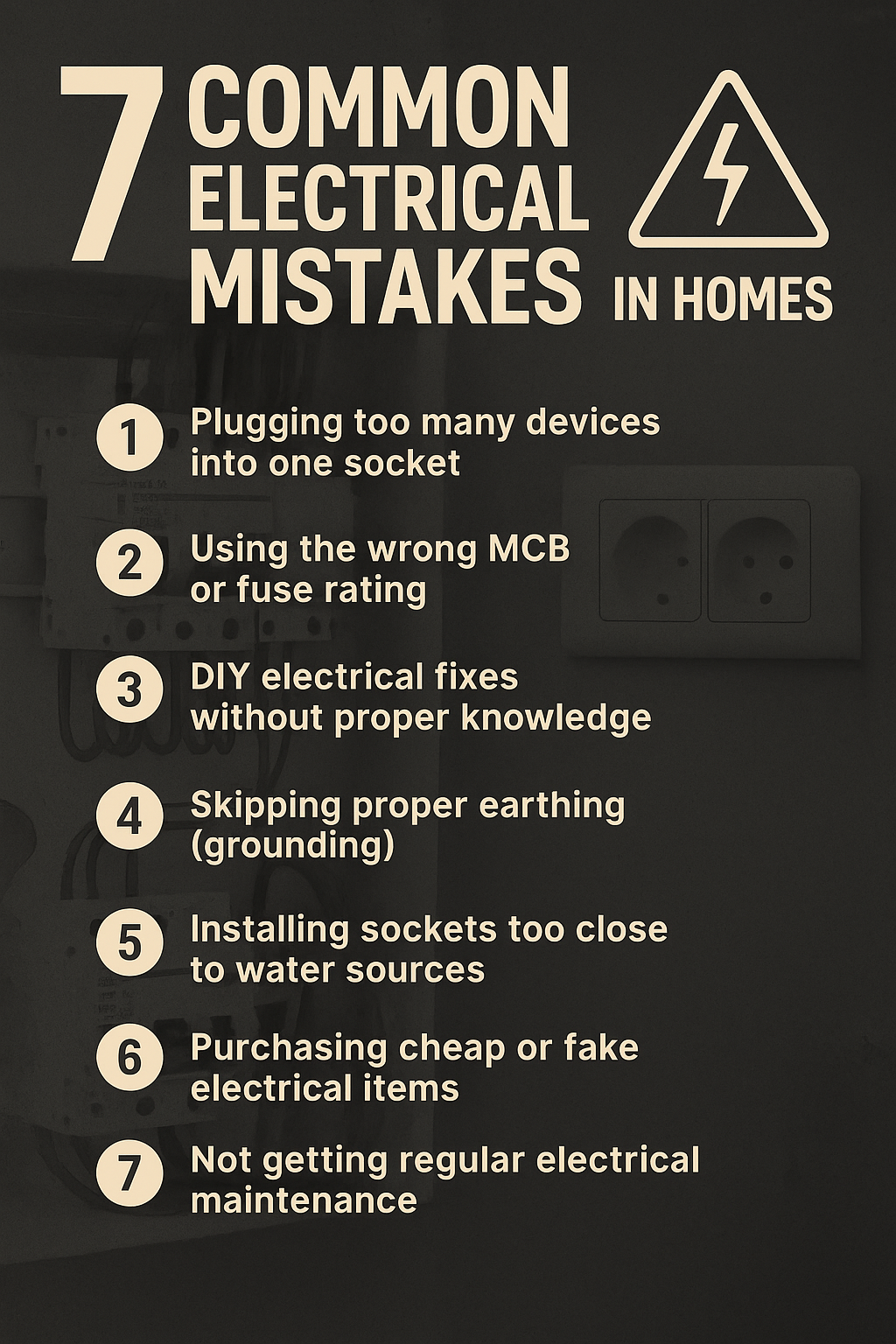
1. Plugging Too Many Devices into One Socket
It seems harmless enough. You’ve got a multi-plug adapter in the kitchen powering your toaster, kettle, microwave, and sometimes your mobile charger too. But the electrical outlet behind it is only meant to handle so much load.
Why this is dangerous:
Every outlet has a rating and overloading a single outlet overwhelms a manufacturer-designed limit. This causes the outlet to heat up. If the wiring in your house is old or your adapter doesn't have surge protection, the result can be melted plastic, burnt circuits, or worse- a fire.
What to do instead:
Place additional wall outlets in high-use areas (like your kitchen and entertainment units). And use extension cords that have built-in surge protection with overload indicators.
2. Using the Wrong MCB or Fuse Rating
It’s a common scenario: an MCB trips frequently, and someone just replaces it with a higher-rated one. Problem solved, right? Not quite.
What’s the danger?
An MCB that’s too strong for your wiring won’t trip when it should. That can allow dangerous current to pass through your appliances or even cause wiring to overheat behind your walls.
The better way:
Calculate the load on each circuit and choose the right MCB rating. If you’re unsure, bring in a certified electrician. Don’t guess with this—your safety depends on it.
3. DIY Electrical Fixes Without Proper Knowledge
Changing a bulb or a switch plate? That’s fine. But trying to connect wires, replace a fuse box, or shift sockets without proper know-how? Not a good idea.
Here’s why:
Not only can improper wiring lead to reverse polarity and shock hazards, but it may also stealthily create stress in your system that can build over time. If you do come across a problem it might take the form of a unique issue with a major appliance losing power or igniting into flames.
What to do in place:
Instead of any wiring beyond plug and play, consult a licensed professional. It may cost more, but if you think about it, it doesn't cost all that much for a piece of mind!
4. Skipping Proper Earthing (Grounding)
If you’ve ever gotten a mild shock from your washing machine or refrigerator body, that’s your system crying out for proper earthing.
Why it matters:
Earthing provides a safe path for excess current, especially in case of a fault. Without it, any metal-bodied appliance becomes a shock hazard.
How to correct it:
Make sure that every appliance, especially high-wattage ones like geysers, ACs, or inverters, are grounded effectively. Get your electrician to check the main earth pit and check the resistance.
5. Installing Sockets Too Close to Water Sources
This happens more than you think. Someone adds a socket near a sink for convenience—without realizing they’re placing an electrical point in a wet zone.
Risk factor:
Water and electricity don’t mix. A small splash from washing dishes or brushing your teeth near such a socket can cause a short circuit or a serious shock.
The solution:
There should be a minimum distance of 1m between a socket and a water source in kitchens and bathrooms. If this is not achievable, then installation of either an IP-rated waterproof socket, or the installation of a RCD (Residual Current Device).
6. Purchasing Cheap or Fake Electrical Items
We understand the temptation of skimping a few rupees on switches, wires or MCBs. When it fails under load, you could also be assuming a great deal of risk.
The risk:
Poorly made products can lack insulation, overheat easily, and failed products do not work under load! Some products might not even show the compromise until it is too late!
What you could do:
As a rule, buy ISI-marked, or branded product from Blitz Electrical, or the likes. While their price may be a few rupees higher, their performance and safety cut-off values are far higher.
7. Not Getting Regular Electrical Maintenance
Many homes have never had an inspection completed on the wiring after the contractor completed the work. However, like plumbing or your AC requiring service, often electrical systems require some updates too.
Why it is important:
Wires can degrade or break, terminals can loosen, and the insulation can degrade. An update may not find a problem but could very well find one before it damages the house or injures someone.
The smart move:
Try to have at least annual maintenance checks completed ideally, if not, every two years. Ask your local electrician to inspect the distribution board, check the MCB's, wiring joints and earthing joints.
Quick Summary Table
| Mistake | Risk | Recommended Fix |
|---|---|---|
| Overloading outlets | Fire hazard | Use surge protectors, add more outlets |
| Wrong MCB rating | Shock/fire | Match MCBs to circuit load |
| DIY wiring | Malfunctions | Hire a professional |
| No grounding | Electrocution | Install proper earthing |
| Sockets near water | Short circuit | Use waterproof sockets |
| Cheap products | Product failure | Choose ISI-marked brands |
| No maintenance | Silent issues | Inspect every 2 years |
FAQs
Conclusion
When it comes to the electrical systems in your home, it might seem like you can just “set it and forget it,” maybe because keeping these systems in good working order requires just as much care. It is easy to ignore slightly broken parts or cut corners, but, as we discussed in this booklet, smaller problems can turn into bigger ones. If you completely know what you have in your house, then it can be straightforward to stay clear of most or all of these common errors (and you may only need to call in a pro if it gets beyond your reach).
If you are embarking on a home improvement project, looking into solar options, or simply want to have peace of mind about whether your electrical environment in the house is safe, then consider these 7 things to check off of your list.
👉 If you are looking for quality electrical safety products for your Indian home, please check out Blitz Electrical for trusted, tested, and well made.