The Basics of Miniature Circuit Breakers (MCBs)
Understand the role, types, and importance of Miniature Circuit Breakers (MCBs) in ensuring electrical safety and protection.
The Basics of Miniature Circuit Breakers (MCBs): Understanding Their Role, Function, and Importance
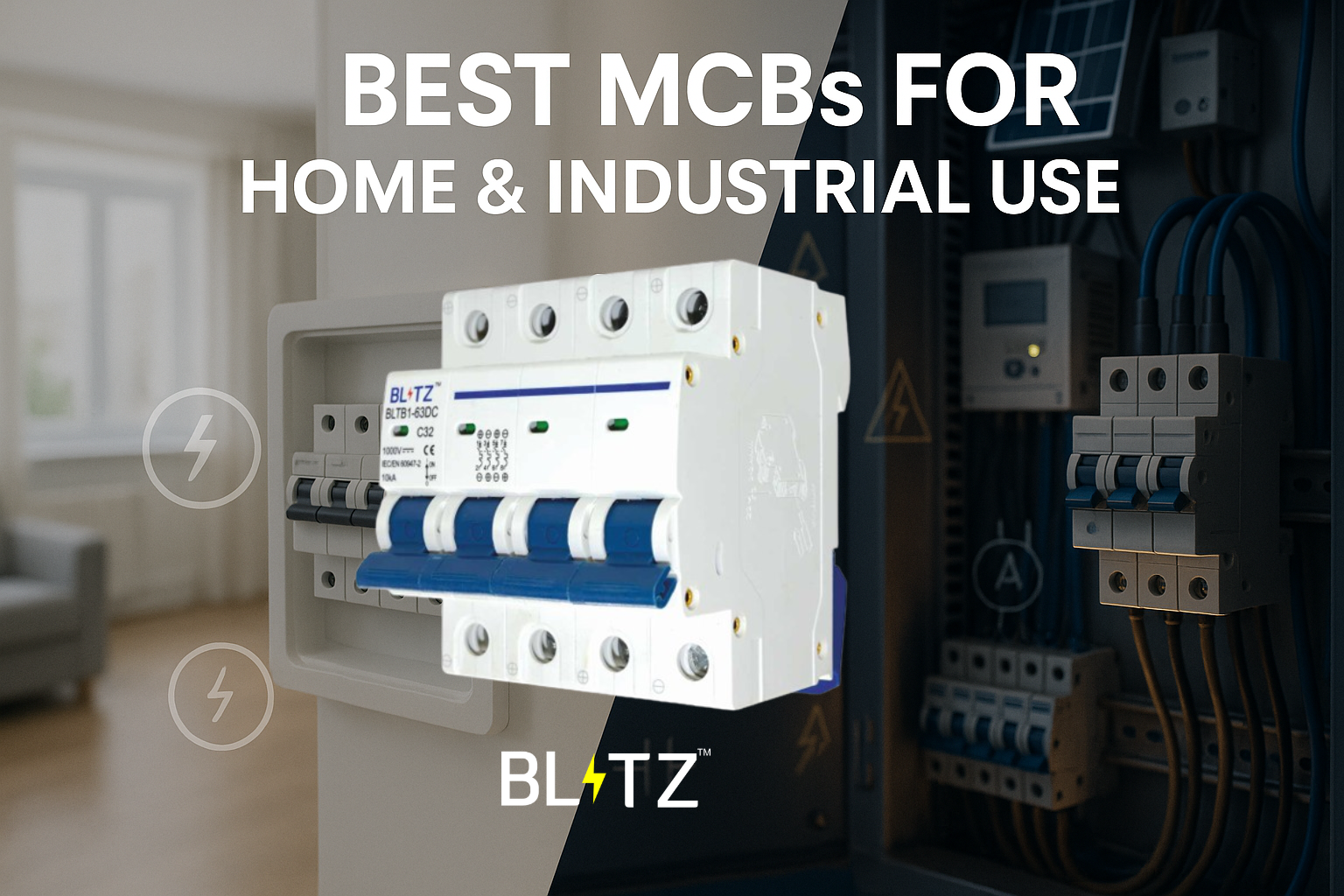
We depend on electricity for almost everything in our life, but along with the power comes the risk of overcurrent, short circuit and electrical fires. So to ensure safety and protect the power system, a really small yet very powerful device is the Miniature Circuit Breaker (MCB) which is the instrument that saves the day. MCBs are the safety elements that have become a part of the standard of all electrical installations, be them in homes, offices, or industries.
This blog is a complete guide to the MCBs-explaining what they are, their working, their types, the benefits of the MCB and how to get the right one for you. Our first step towards the topic is.
What is a Miniature Circuit Breaker (MCB)?
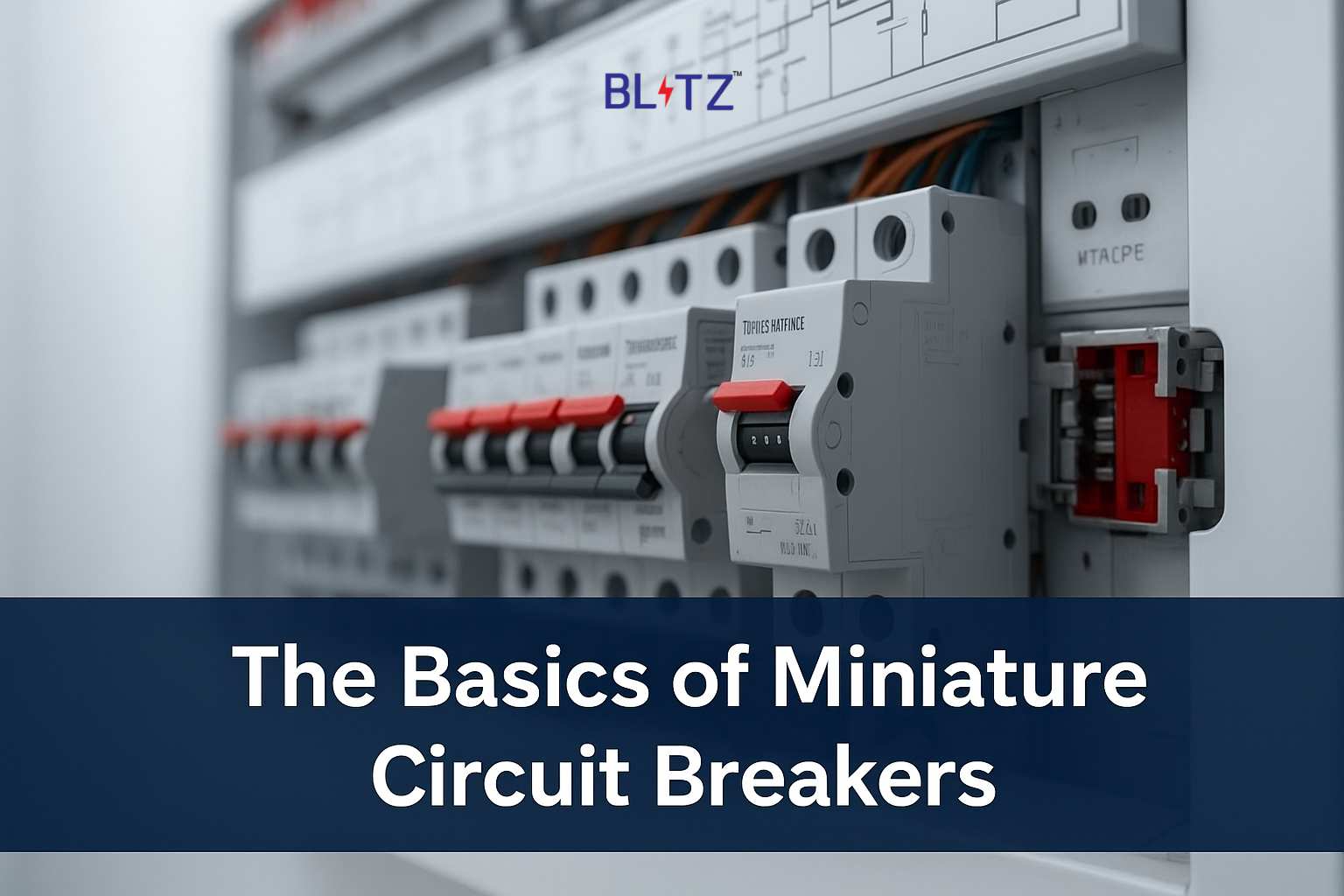
A Miniature Circuit Breaker (MCB) is an apparatus that is able to automatically separate the electrical circuit that is the source of the overload or the short circuit in order to rescue the circuit from harm. To put it simply, it ceases the power supply when the amperage in the circuit is higher than the allowed limit.
MCBs were not widely used, and previously fuses were the go-to options for electrical circuit protection. But fuses had to be changed after each fault, whereas MCBs only need to be reset by turning the lever to the ON position. This is why MCBs have become the most dependable, comfortable, and safest way to be used in today's electrical systems.
How Does an MCB Work?
An MCB operates on two main principles-thermal and magnetic tripping mechanisms.
1. Thermal Tripping (Overload Protection)
When an electrical circuit is injecting more current than the circuit is capable of handling (for example, when too many appliances are connected) the bimetallic strip in the MCB heats up. The heat makes the strip bend, thus the trip mechanism is activated and the circuit is disconnected.
It is the wiring and devices that are thus protected from overheating and even from the fire.
2. Magnetic Tripping (Short Circuit Protection)
If a sudden surge of current is caused (e.g., by a short circuit or a fault) the magnetic coil in the MCB will produce a strong magnetic field. The field that is created pulls the trip lever thus the circuit is broken in a very short time.
The very fast intervention of the device saves the wiring and the other equipment that can be connected in the circuit from getting damaged seriously.
Once the fault is cleared, the MCB can be reset manually by flipping the switch back to the ON position.
Key Components of an MCB
A few persons could easily confuse a small MCB for a single piece of simple hardware, but under a close look one can realize that an MCB has a quite complex work and thus, it is made up of essential parts, most of which are explained below:
- Frame or Housing: the body of the MCB is constructed by a sturdy material that is also a flame-retardant type, thus, it ensures both safety and durability.
- Operating Mechanism: The toggle switch that allows manual ON/OFF and reset.
- Bimetallic Strip: Along with the other elements it is this strip that is very likely to be the one to feel the overload and maybe temperature rise.
- Magnetic Coil or Solenoid: A component that can follow the sudden changes in the current and thus is used in short-circuit detection.
- Arc Chute: Cools the electric arc that is due to the quick breaking of the circuit.
- Contacts: Contacts are the conducting portions that are in series with the load.
Types of Miniature Circuit Breakers
MCBs are classified into different types (B, C, D, K, Z) based on their tripping characteristics-that is, how quickly they respond to overloads and surges.
- Type B MCB: Trips between 3 to 5 times the rated current. Ideal for residential or light commercial applications where current surges are low. Commonly used for lighting circuits and small appliances.
- Type C MCB: The device turns off electric circuit after 5-10 times over current based on its rated current. It is a good choice for industrial and commercial facilities where there are moderate current surges.
- Type D MCB: Interruption of the circuit takes place from 10 to 20 times the rated current. It is a solution for heavy-duty industrial applications with high inrush currents.
- Type K MCB: The device turned off the electric circuit (trip) is between 8 and 12 times the rated current. Inductive loads such as compressors, pumps, or motors with higher starting currents can be used.
- Type Z MCB: Trips between 2 to 3 times the rated current. Very sensitive to short circuits and used for delicate electronic devices or circuits that need high precision.
Advantages of Using MCBs
The popularity of MCBs over traditional fuses is due to their numerous advantages:
- Enhanced Safety: During abnormal conditions, MCBs offer the automatic disconnection of electrical circuits thus reducing the risk of fire, electric shock, and damage to the equipment.
- Easy to Operate: If MCBs are replaced after a trip, they can simply be reset, thus saving time and maintenance effort. In contrast, fuses which need replacement.
- High Reliability: They are very dependable and precise in the identification of the overcurrent or short-circuit situations.
- Compact Design: MCBs are small in size and thus can be easily mounted on DIN rails in the distribution boards, thereby saving space and being more attractive.
- Better Control: Each MCB is capable of protecting an individual circuit thus enabling selective control and isolation during maintenance.
- Longer Lifespan: MCBs are able to operate for thousands of times without a performance loss and thus they offer long-term durability.
Applications of MCBs
- Residential electrical panels for lighting and socket protection
- Commercial buildings for office power distribution
- Industrial plants for motor and machinery protection
- Data centers and IT setups to prevent downtime during faults
- Renewable energy systems like solar power installations for circuit isolation and safety
How to Select the Right MCB
Decision about proper MCB hinges on three factors, i.e. load type, current rating, and application environment. A few advices are as follows:
- Define Load Type: Resistive loads (lighting, heating) → Type B MCB; Inductive loads (motors, pumps) → Type C or D MCB.
- Check the Current Rating: The MCB rating (in amperes) should be equal to the circuit’s normal current. Common ratings: 6A, 10A, 16A, 20A, 32A, 40A.
- Take Breaking Capacity into Account: 6kA - Residential, 10kA - Commercial/Industrial.
- Choose a Trustworthy Brand: Purchase from reliable manufacturers like Blitz, Schneider Electric, Siemens, Legrand, or ABB meeting IEC 60898 / IS/IEC 60898-1 standards.
Maintenance and Safety Tips
- Inspect regularly: Check for discoloration, burning marks, or loose terminals.
- Do not overload the circuits: Balance loads to avoid unnecessary trips.
- Seal the panel: Prevent water ingress to avoid rust and false tripping.
- Replace worn-out MCBs: Never reuse a damaged breaker.
- Label each circuit: Helps quick identification during maintenance or emergencies.
FAQs
Conclusion
Miniature Circuit Breakers (MCBs) are essentially the very first protective layer in the case of overcurrent and short-circuit situations in the electrical systems of modern times. Their reliability, simplicity in use, and protective features are some of the reasons that make them an absolute necessity in any residential and industrial electrical system.
Understanding their types, working principle, and how to select them correctly will definitely make your electrical installation safer, you will also save it from the damage, and you will be saved from the risk of a dangerous situation that may cause your loss.
It is a small thing to keep in mind that an MCB device can be the key to saving your home and equipment from electrical disasters. So, why not take the safety a step further? The safest way is to buy MCBs from a reliable brand like Blitz and keep safe and comfortable for a long time.