Advantages and Uses of Miniature Circuit Breaker
Discover the key advantages and practical uses of Miniature Circuit Breakers (MCBs). Learn how MCBs enhance electrical safety, prevent overloads, and ensure reliable power protection in homes, offices, and industries.
Advantages and Uses of Miniature Circuit Breaker (MCB)
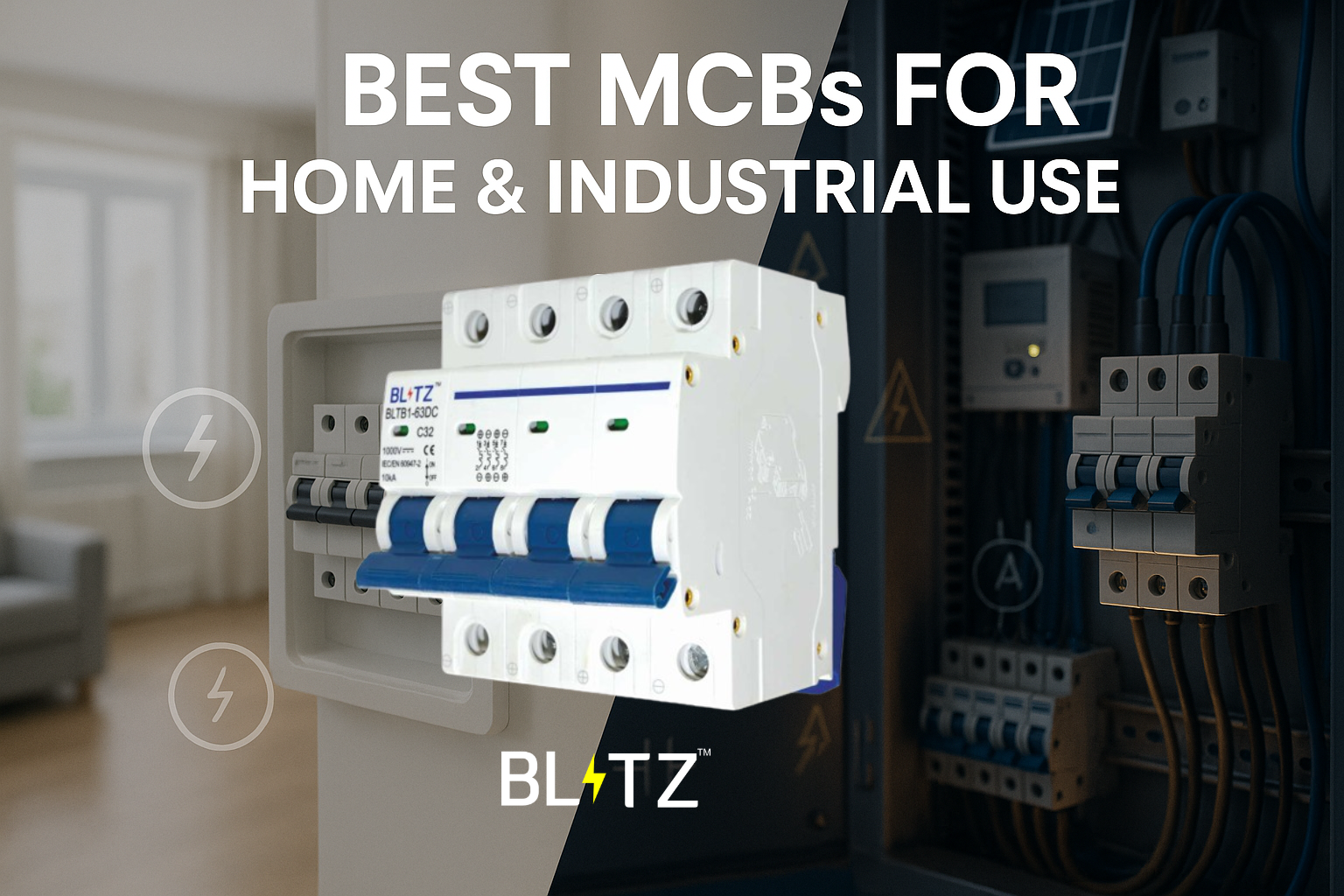
Miniature Circuit Breakers (MCBs) are among the most vital safety devices in any modern electrical setup. Regardless of the place being a residential area, office, commercial complex, or an industrial facility, MCBs contribute to the safe distribution of power and rescue the electrical circuits from the risk of the damage. Initially, MCBs were not available, and thus, fuse systems were used which were often unreliable, inconvenient, and lacked precision. Now, MCBs are the most favorite ones because of their correctness, fast switching feature, and being maintenance-friendly.
This blog unwraps the main benefits and uses of MCBs, thus giving reasons for their being an absolute necessity in any electrical network.
What Is an MCB?
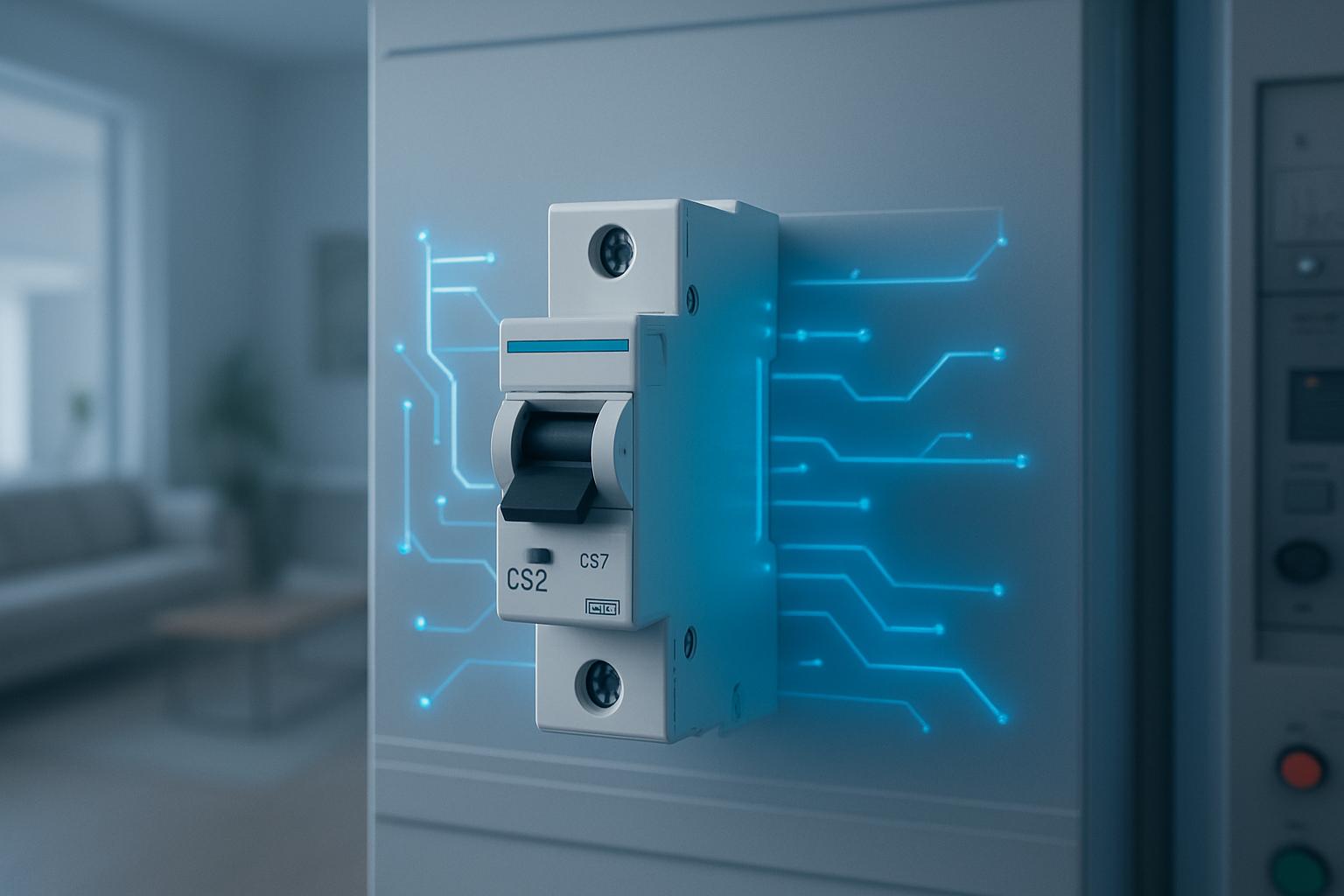
An MCB (Miniature Circuit Breaker) is an electromechanical device that is set up to cut off the current supply automatically if it senses a short circuit or overload. Unlike fuses, MCBs do not get destroyed in the operation and therefore can be reset and used again, which makes them more convenient and cost-effective.
Advantages of Miniature Circuit Breakers (MCBs)
1. Enhanced Safety and Protection
The primary function of an MCB is to provide protection against electrical hazards. It immediately trips when it detects:
Short circuits
Overloads
Faulty wiring
This rapid response helps prevent fire risks, appliance damage, and electrical shock incidents.
2. Easy to Operate and Reset
While fuses are blown and have to be replaced, MCBs work with a simple ON/OFF switch mechanism. They can be turned ON again after disconnecting the tripped device once the incident has been cleared, so they are handy and easy to operate.
3. High Breaking Capacity
Without getting damaged, MCBs are engineered to withstand such high fault currents. In fact, they are capable of severing high short-circuit currents in a safe manner without giving off explosions, sparks, or any kind of hazards - which is a certainty a conventional fuse cannot provide.
4. Durability and Long Service Life
Top-tier MCBs are very robust from a mechanical standpoint and are in many cases, designed for a few thousand switching cycles during their lives. In general, such devices need very little care and can stay dependable for a long time.
5. Improved Accuracy and Reliability
MCBs feature very accurate trip characteristics. They are capable of recognizing a temporary surge and a real fault. Such an accuracy keeps it safe to operate without an interruption of the electrical system.
6. Better Identification of Faults
Most mini circuit breakers have a visible trip indicator. This facilitates the identification of the circuit that has the problem, particularly in control panels that consist of several circuits. Besides, it shortens the time spent on the reckoning of the faults.
7. Environmentally Friendly
In contrast to fuses, MCBs do not have to be changed very often. What is more, their duplex nature leads to less waste and, thus, they are more environmentally friendly.
8. Variety of Ratings for Different Uses
The ratings of MCBs are ranged in multiples (6A, 10A, 16A, 32A, 63A, etc.) as well as trip curves (B, C, D) to meet the exact application. This to a good extent, determines the use of the devices to the domestic electrical circuits or to heavy industrial machine application.
9. Compact and Space-Saving Design
MCBs are small in size and are made in such a way that they can easily be accommodated in DBs that have a limited space. They facilitate neat wiring that is also easy to install in modular electrical systems.
Uses of Miniature Circuit Breakers (MCBs)
1. Residential Applications
In homes, MCBs protect circuits powering:
Lights and fans
Television and appliances
Power sockets
Air conditioners and kitchen equipment
They are the means through which are prevented those fires which occur as a result of an excessively loaded wiring or a malfunctioning appliance.
2. Commercial Buildings
Various types of buildings such as offices, hospitals, schools, and shopping malls use MCBs as the main factor for the supply of power without any interruptions and for safety as well. There are many places where these devices are put to work extensively, such as:
HVAC systems
Lifts and escalators
Lighting systems
Office equipment
Communication networks
Their reliability supports smooth operation in spaces with high electrical demand.
3. Industrial Applications
Industries use MCBs to protect machinery and heavy equipment. They are used in:
Motor control panels
Industrial power distribution
Manufacturing machinery
Conveyor belts
Heaters and motors
MCBs ensure safe operation even under fluctuating loads and high fault levels.
4. Public Infrastructure
Miniature circuit breakers (MCBs) are devices used in the railways, airports, broadcasting stations, and data centers to ensure the electrical safety of these facilities. The rapid tripping of their breakers is what prevents a big failure, which can extend to thousands of users and thus be very dangerous.
5. Automotive and Transportation Systems
Present-day electrically powered vehicles, charging stations, and transport signaling systems have in their design the use of MCBs as the devices for the protection of the circuit and the assurance of the system's integrity.
6. Renewable Energy Systems
MCBs are also a part of solar power setups, wind turbines, inverter units, and battery packs where they serve as the safety devices in the energy supply and the prevention of the system failure.
Types of MCBs Used in Different Applications
Type B MCBs
Trips at 3-5 times the rated current
Ideal for home and light commercial use
Type C MCBs
Trips at 5-10 times the rated current
Suitable for small industries, motor loads, and commercial equipment
Type D MCBs
Trips at 10-20 times the rated current
Used in heavy machinery, transformers, and large motors
FAQs
Fuse: It has to be replaced every time there is a fault and may not always offer consistent protection.
Conclusion
Miniature Circuit Breakers (MCBs) are the primary agents that guarantee electrical safety and system reliability. Their benefits, such as protection against overload and short circuit, easy operation, and long life, are a few of the reasons why they are an essential part of any residential, commercial, or industrial setting. In any case, MCBs are the ones that keep the power supply stable and safe, be they in the houses, the machines, the renewable systems, or the public infrastructure.
It is becoming more and more imperative to make the correct choice of an MCB as electrical consumption keeps on increasing. A good-quality MCB is a winning investment in appliances and electric systems, plus it is a must for the safety of people and the property.