How Industries Use SPDs to Prevent Equipment Failures
Explore how surge protection devices safeguard critical machinery and minimize costly downtime across industrial operations.
How Industries Use SPDs to Prevent Equipment Failures
In today's industrial universe, from manufacturing plants to data centers, solar farms to telecom towers - equipment uptime and reliability are vital. Transient voltage surges can sneak in at any given time due to lightning strikes, grid loads switching, or simply during internal machine operations. Surge Protective Devices (SPDs), also referred to as surge arrestors or transient voltage suppressors, help avoid equipment failures and the needed production or operational downtime. Here is a detailed, deep dive on how industries employ SPDs effectively.
1. The basics of SPDs: What they are and how they work.
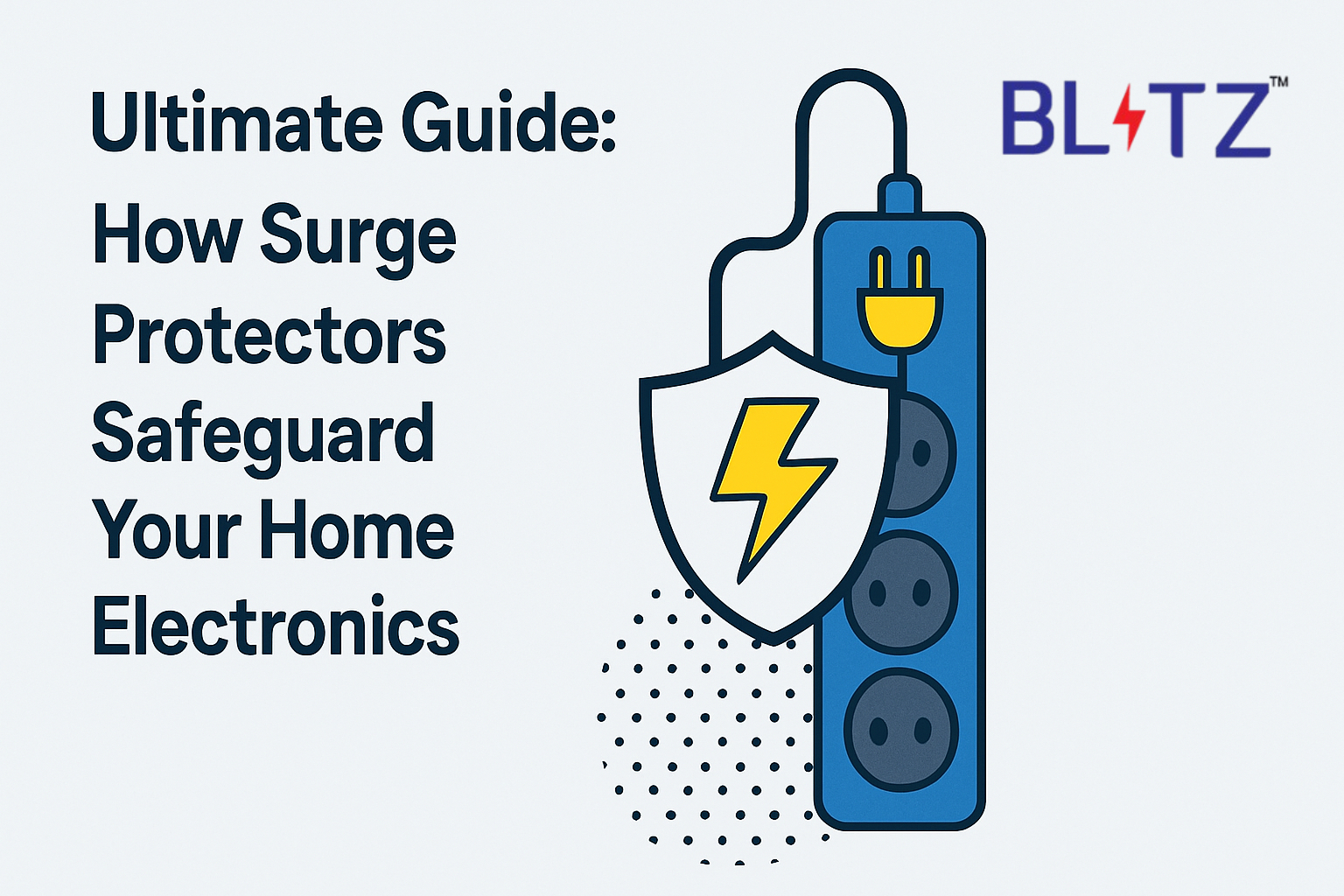
A Surge Protection Device (SPD) provides equipment protection by clamping or shunting excess voltage taken off critical loads. Additionally, internally, an SPD is non-conductive until voltage exceeds a set threshold. When this happens, it starts diverting surge current from the critical load to ground (instead of through sensitive equipment downstream). If and when the SPD survives, it will be back into a high-impedance state.
The key technical specifications are:
- Clamping (let-through) voltage: Where the SPD will become conductive.
- Surge current rating (kA): How much energy the SPD can safely shunt.
- Response time: Usually a few nanoseconds, but more significant in protecting from fast surges.
An educated manufacturer knows they are using technologies like Metal Oxide Varistor (MOVs), Gas Discharge Tubes (GDTs), Thyristor-based voltage and surge suppressors, sort a series-mode filter.
The most single documented technology is MOVs. MOVs degrade with time; they can operate as long as they can until they fail, but will have to be monitored for replacement or replacement.
2. Classification of SPDs and Types of Protection
To develop multi-stage protection systems, Blitz Electrical identifies three main variations of SPDs, namely:
- Type 1 (Service-entrance protection): Installed at the service entrance to the building at the main panel or meter. This type handles high-energy surges, which include elements of partial lightning discharge. This is your first line of defense.
- Type 2 (Distribution board protection): Colocated with the distribution board in the building, a Type 2 SPD intercepts internal or residual surges. Sensitive electronics have a much better chance of avoiding failure with Type 2 devices.
- Type 3 (Device-level protection): These are power-strip or plug-in units that are located in the area of an appliance or device. This is the last line of defence for the sensitive endpoint devices.
The cascade approach of a Type 1 SPD → Type 2 SPD → Type 3 SPD will ensure layers of protection from external and internal surges.
The Blitz Electrical SPD models also feature specialized SPDs such as data-line SPDs, and DC SPDs for solar photovoltaic systems. Lastly, as mentioned above, they can offer single combined SPD models for smaller installations.
3. Industry Uses: SPD in Action
A. Manufacturing & Processing Facilities
Manufacturing and processing facilities have complex machinery and automation systems that will always be vulnerable to internally and externally sourced surges. SPDs are used at distribution panels and control panels to protect PLCs, VFDs, and HMIs to minimize downtimes and maintain product consistency.
B. Data Centers & IT Equipment
Servers, storage products, and networking equipment (routers & switches) only need a very small voltage spike to become corrupt, shutdown, or halt operation. Integrating SPDs at the point of power entering the system (the panels), and some rack-level protection will help keep the system operational.
C. Telecom & Smart Infrastructure
Telecom towers, base stations, and smart systems rely on continuous operation. Surge protective devices are fundamental to protecting routers, switches, and communications interface equipment against failure from surges and lightning, particularly when corroding infrastructure is off grid in remote areas or high lightning locations.
D. Renewable Energy & EV Charging
Whether solar PV inverters, storage battery systems, EV chargers or wind turbine controls, all are exposed to surge protection from utility companies and the environment. Installing SPDs on the DC and AC sides are the best protection for these assets against surges and helping to maintain uptime.
E. Health Care & Critical Facilities
Hospitals and critical systems operate under a constant demand of safe and continued operation. Hospitals and emergency systems rely on fire alarm panels, patients monitoring systems, and critical supplies engagement. The integration of SPDs is a requirement and protection of human life.
4. Best Practices for Designing Effective SPD Systems
- Proper selection and coordination: It is not enough to have the correct SPD. SPD effectiveness is significantly affected by identifying the correct voltage, grounding style, and magnitude of surge. The coordination of different SPDs in the system also affects performance.
- Don't oversize SPDs: Oversized SPDs can allow smaller, repeated surges to pass through and degrade the connected equipment over time. It’s important to right-size SPDs to properly protect the equipment.
- Cascaded protection: Install Type 1 near the service entry, Type 2 at the distribution boards, and Type 3 close to sensitive loads for layered protection.
- Grounding and equipotential bonding: A low-impedance grounding system is critical for dissipation of surge energy. Poor grounding can reduce protection and increase risk.
- Inspection and maintenance: SPDs degrade over time. Frequent inspections and timely replacements prevent hidden failures.
5. How SPD Deployment Saves Money for Industries
- Reduced downtime: Minimizes catastrophic failures and operational interruptions.
- Longer equipment lifespan: Protects electronics from surges, reducing repair and replacement costs.
- Improved safety: Lowers risk of electrical fires and overheating.
- Compliance with safety codes: Meets regulations in sectors like healthcare and data centers.
FAQs: Industrial SPDs
Conclusion
All sectors of industry use SPDs to protect valuable equipment from surge damage, reduce operational risk, and maximize uptime. With proper installation from Type 1 through Type 3, and good grounding and maintenance, potential losses can be mitigated.
Blitz Electrical manufactures high-performance, reliable SPD solutions for today's industries, ensuring protection from both naturally occurring surges and surges caused by internal equipment.
When investing in surge protection, industries safeguard their business continuity, efficiency, and peace of mind.