Surge Protection for Home Appliances: How to Safeguard Your Electronics
Protect your home appliances from electrical surges and keep your electronics safe.
Surge Protection for Home Appliances: How to Safeguard Your Electronics
These days in our contemporary homes, we are almost addicted to the use of electronic devices and home appliances. What used to be basic needs like refrigerators and washing machines have now evolved into computers and smart TVs, making our lives easier and more comfortable. Still, the most common problem that these appliances face without us realizing it, are electrical surges. In a matter of seconds, a sudden spike in electrical voltage can make your appliances go obsolete, cause them to deteriorate or even annihilate them. Hence, the installation of surge protection for home appliances should be considered as the very first step rather than just an extra option.
This article addresses the issue of surge protection, its importance, the science behind it, and some reliable ways of securing the safety of your home gadgets.
What is a Power Surge?
A power surge is essentially a short, a power overload, or a voltage spike which results in voltage levels in an electrical circuit rising very abruptly and going beyond the normal levels. For instance, regular household voltage is about 220-240V (in India), but a surge can take this up to several thousand volts in mere milliseconds.
Common Causes of Power Surges
- Lightning strikes: A single lightning strike or a lightning that is extremely close to your house can change your network voltage drastically.
- Faulty Wiring: A rotted and ill-treated wiring system is capable of causing power surges in the delivery of electricity.
- High-power appliances: The situation of the heavy appliances like air conditioners or refrigerators, when they are turned on or off, may result in temporary voltage fluctuations in the power supply.
- Power grid issues: A sudden change in the utility supply or a switch event in a transformer can result in a surge.
In such a short time, surges have the power to injure the most sensitive electronic devices like laptops, LED TVs, or smart home gadgets, thus, these devices may become non-functional permanently or have a shorter lifespan.
Why Surge Protection is Essential
While small appliances like lamps may withstand occasional surges, expensive electronics and home appliances are highly sensitive. Reasons that point to the necessity of surge protection:
- It keeps safe the costly electronic devices: Just one surge is capable of making the entire destruction of a costly appliance.
- It makes possible the data retention: Computers, laptops, and smart devices are the most valuable sources of personal and professional data. A surge can simply wipe it out.
- It helps in cutting down the repair expenses: The cost of repairing or replacing the malfunctioned electronics is most of the time, by far, higher than the cost of installing a surge protector.
- It can keep the appliances work for a longer period: Minor frequent surges slowly but surely degrade the components of your electronics and therefore, shorten their lifespan.
So, essentially surge protection is similar to an insurance policy for the home electronics.
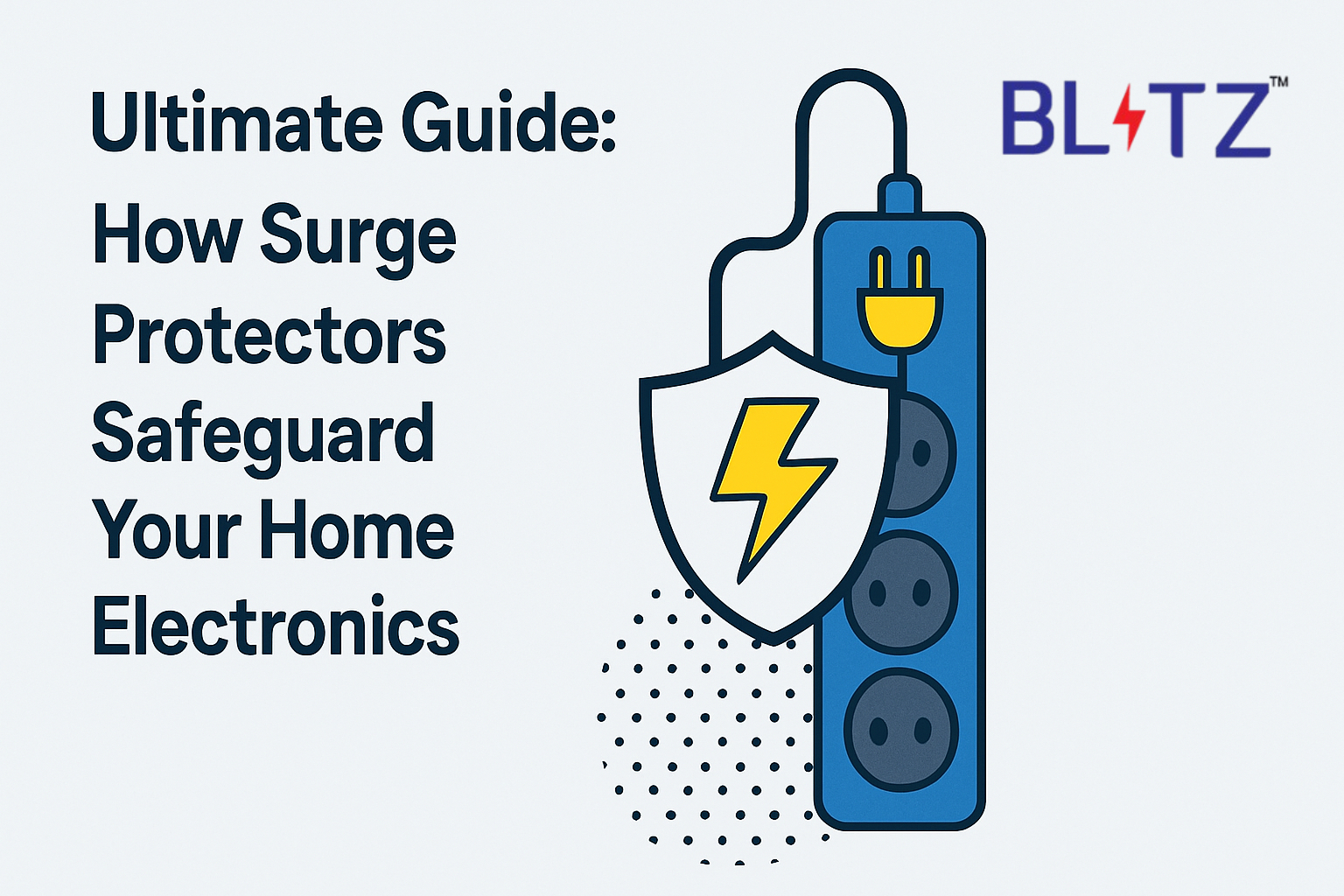
Types of Surge Protection Devices (SPDs)
- Plug-in Surge Protectors:
Typically put to work for laptops, TVs, and home theater systems. Installation is simple - just insert it into a socket. A device of this nature might have features such as multiple outlets, indicator lights, and USB charging ports.
Pros: Cheap, easy to take along, and can be utilized in different manners.
Cons: Extremely limited power supply capacity for heavy energy-consuming appliances.
- Whole-House Surge Protectors:
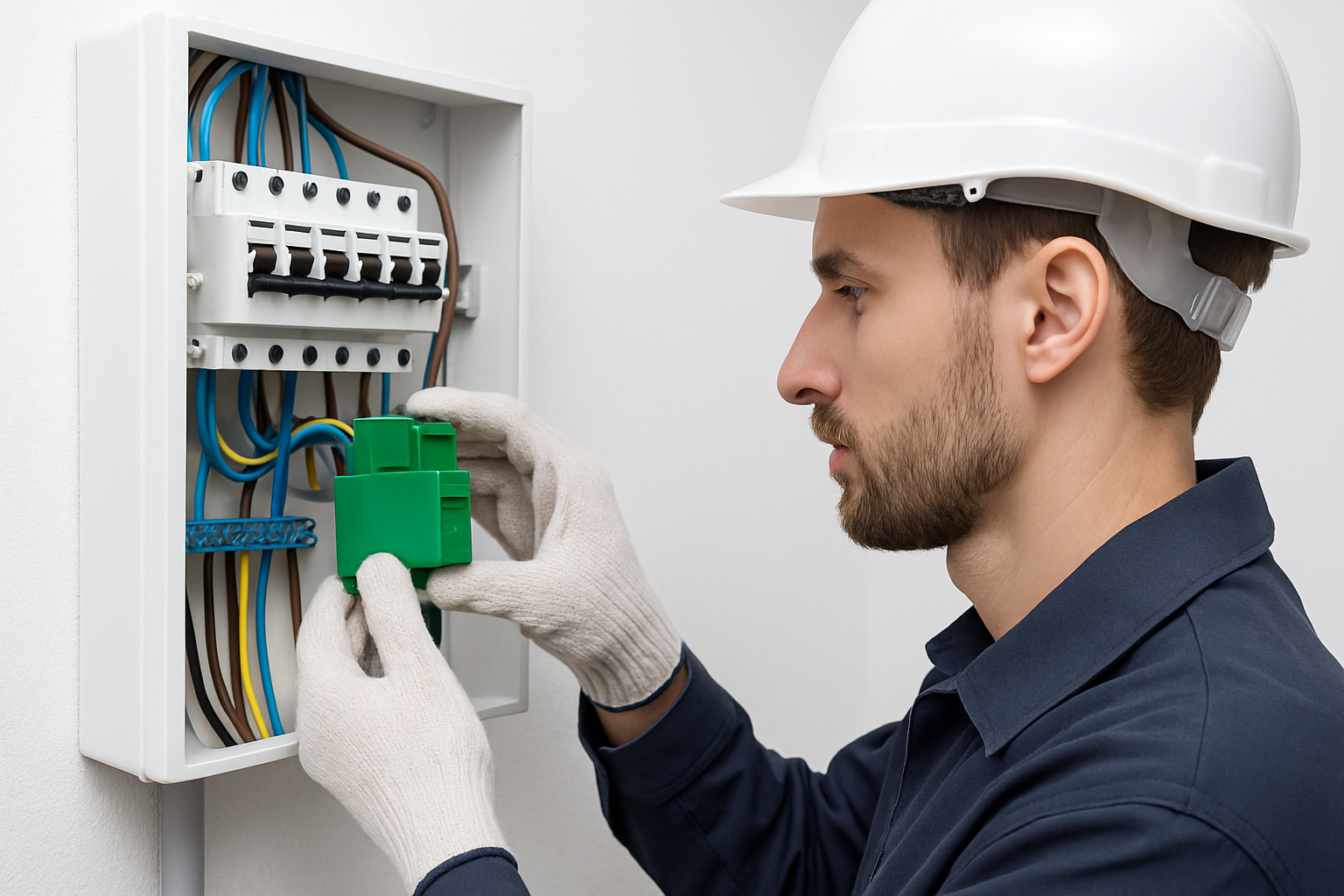
They are at the main electrical panel. The first line of defense between the power grid and all the appliances and devices in the house. Are capable of handling massive surges caused by the flashing of the lightning or sudden drop in the power line.
Advantages: Full protection, a saving for the future.
Disadvantages: The work has to be done by a professional, initially it is costly.
- Dedicated Appliance Surge Protectors:
Help on a single front can be the turning point especially in the case of appliances that are quite expensive, i.e., refrigerators, washing machines, or air conditioners. The unit is given on the front to provide safe electric current as per the machine’s power supply requirements.
Advantages: The best protection for sensitive or costly appliances.
Disadvantages: Only the appliance connected will be protected against surges, not the entire house.
Key Features to Look for in a Surge Protector
- Joule Rating: This is a measurement of the total energy the device can soak up. A higher number is a sign of a better protection device.
- Response Time: This is the time interval between the occurrence of a surge and the suppression of the surge. Thus, a fast response time is very important as it minimizes the chance of the extra voltage to leak into the devices.
- Clamping Voltage: It is the voltage value when the device stops the excess current. Lower clamping voltage means quicker protection.
- Indicator Lights: Shows if the protector is still working.
- Warranty & Connected Equipment Guarantee: Some SPDs offer insurance for connected devices in case of failure.
Tips to Safeguard Home Appliances Effectively
- Use Surge Protectors for Everything Electronics: The laptops, TV, PlayStation, and smart home gadgets must be present in a surge protector wired.
- Put a Whole-House Protection: A main panel SPD is the safest and most comfortable way to secure the entire house.
- Unplug the Devices if There Are Storms: Head off an electronic disaster by unplugging your devices if a thunderstorm is on its way.
- Don’t Daisy Chain: It is most important not to connect the multiple surge devices in series to avoid the loss of protection.
- Continue to Check and Change Them: A surge protector is not permanent. Change it every 3–5 years or after a big surge.
FAQs
Conclusion
In the situation where the use of electronic gadgets keeps on increasing, it has become extremely imperative to protect your home appliances from power surges. Just a small investment of a surge protector which can be a plug-in, an appliance-specific, or a whole-house one, saves you from a heavy repair bill, loss of data, and appliance damage.
Devices can be protected while you can also have the tranquility of mind if you understand the power surge causes, choose the correct surge protection devices, and employ such a smart practice as unplugging your devices during a storm.
Remember: Surge protection should never be treated as an option - it is indispensable for a safe, efficient, and problem-free home.